City · Saturday, 17 October 2026
Researchers from Cluj develop drones with artificial intelligence for agriculture
The SkAIGreen project, carried out by the Technical University of Cluj-Napoca between 2025 and 2027 and financed by UEFISCDI, aims at the automatic identification of indicator species in meadows for European biodiversity payments.
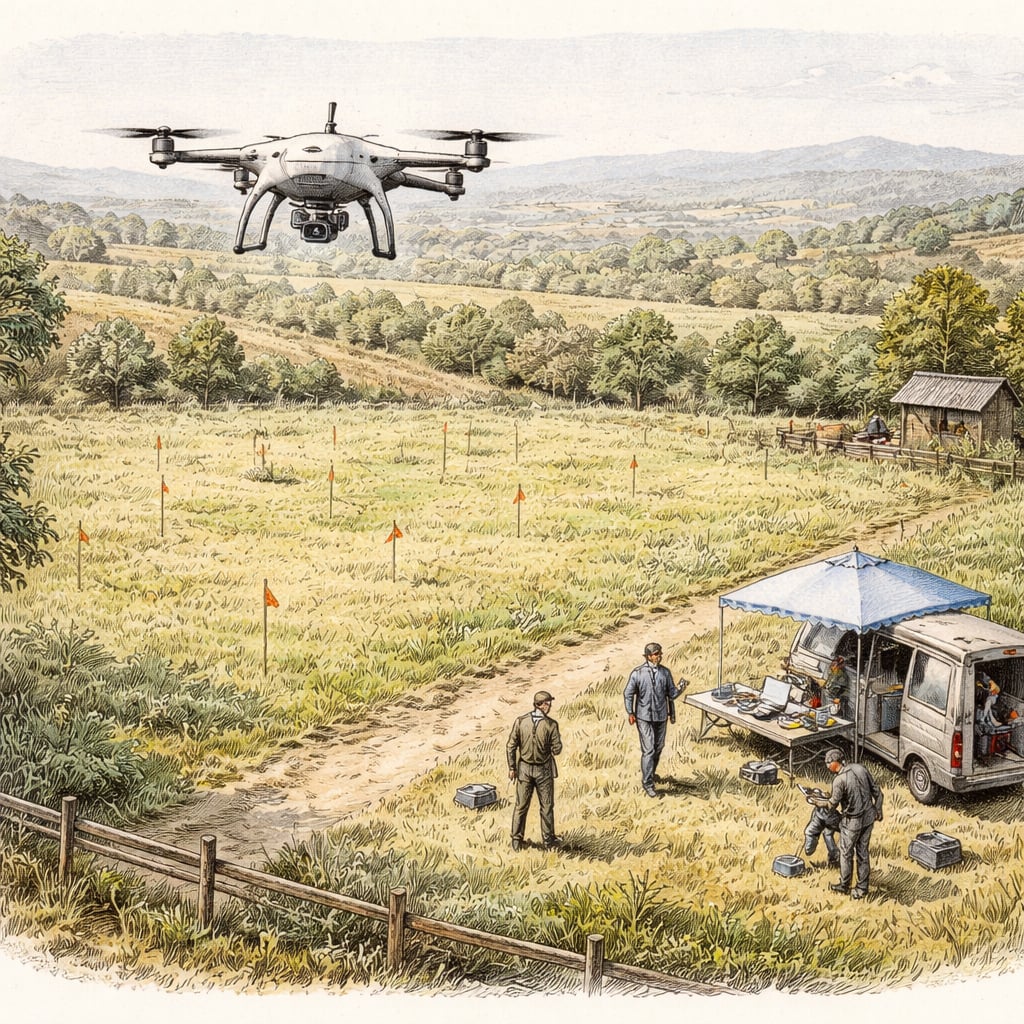
Researchers at the Technical University of Cluj-Napoca are working on drones that can independently identify, in Romanian meadows, plants on which farmers' biodiversity payments depend, as part of the SkAIGreen project, described in the university's 2025 Research Report.
The EU's Common Agricultural Policy offers farmers money if they prove that indicator species grow on their plot, but current manual monitoring is considered inefficient and expensive. A pilot run in Transylvania between 2015 and 2019, coordinated by the ADEPT Foundation, offered farmers between 140 and 180 euros per hectare depending on the number of species found.
The team coordinated by Professor Lucian Bușoniu develops deep learning algorithms for plant recognition from aerial images, plus an active control system through which drones independently choose the routes that find the most species as quickly as possible. The system will run on a DJI drone and will be compared with classical methods and human experts.
Final validation will take place in the Angofa region, near Sighișoara, in the Natura 2000 site Sighișoara–Târnava Mare, where ADEPT has managed a 200-hectare demonstration farm since 2016. In the first year, researchers collected preliminary data at Pădureni, Cluj County, and trained a first model for species segmentation. Similar projects exist in Germany, where farmers can receive 190 euros per hectare, and deep learning models reduce monitoring to eight minutes per hectare, although only half of the species can be mapped this way.
Sources
Earlier in Cluj Vibe
- Cluj-Napoca will have an artificial intelligence research instituteFriday, 4 September 2026
- The new artificial intelligence research institute in Cluj opens in NovemberThursday, 8 October 2026
- The artificial intelligence research institute of UTCN was inaugurated in Cluj-NapocaFriday, 9 October 2026