Green · Saturday, 31 October 2026
Cluj gives up hydrogen trolleybus plan and chooses batteries
The Local Council discusses modifying the project on November 6, and a package of 15 trolleybuses with extended range is estimated at approximately 15.75 million euros without VAT.
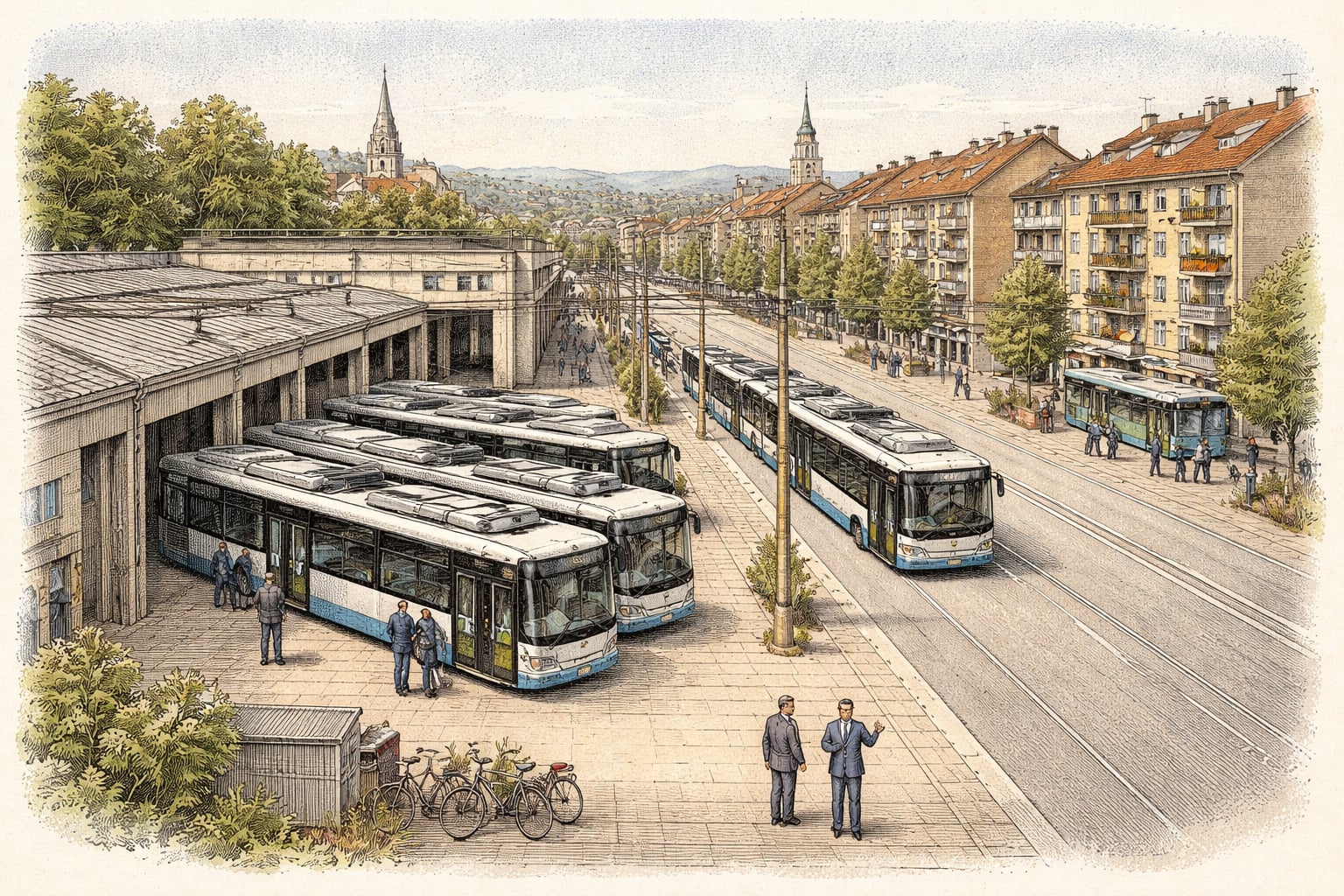
The local administration in Cluj-Napoca is rethinking its public transport modernization strategy, abandoning hydrogen buses in favor of trolleybuses with extended range, which charge on the move under the electric wire and continue on battery where there is no overhead network.
The change comes after a 2026 update of a study conducted by the Technical University of Cluj-Napoca, which shows that hydrogen technology remained an unmet goal due to high vehicle and fuel costs, low energy efficiency and lack of refueling infrastructure. Battery trolleybuses are considered a cheaper solution that uses the existing electrical network in the city.
The modification directly affects the project financed through the North-West Regional Program 2021-2027, initially intended for the purchase of hydrogen buses and works in the Piața 14 Iulie area. For a package of 15 trolleybuses with extended range, the estimated investment is approximately 15.75 million euros without VAT, plus network infrastructure and charging stations at the depot.
The study targets lines 3, 5, 46B and 24B, which connect Mănăștur, Zorilor or Gheorgheni to the center, Train Station or Mărăști, as well as longer routes such as line 8 to the Airport, line 34, line 41 or metropolitan lines to Florești and Dezmir. Mayor Emil Boc spoke about this type of hybrid vehicle back at the end of August, giving the example of line 30.
For a Cluj native living abroad, the news shows that the hometown is changing its plans to modernize public transport, with effects on the lines he used to take.
Sources
Earlier in Cluj Vibe
- New developments on the Someș embankment in GherlaThursday, 29 October 2026
- Harghita included in the world top list of sustainable tourism storiesThursday, 29 October 2026
- Cluj residents returned 167 million packages through the deposit-return systemTuesday, 27 October 2026